The Effect of adulterated and processed foods on growing children
By: Rohaan Ahmad | Aizah Usman | Arham Sheikh | Adeena Murtaza | Zahra Sohail
Abstract
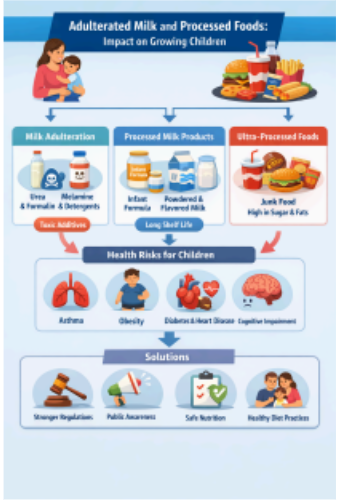
Fig. 1.1: Graphical abstract of how adulterated milk, processed milk products, and ultra-processed foods contribute to adverse health outcomes in growing children
Milk and milk-based products form a significant part of children’s diets, especially in Pakistan. However, the widespread adulteration of milk with dangerous additives driven largely by profit motives and weak regulatory enforcement have raised public health concerns. Apart from this, the growing reliance on processed milk products and ultra-processed foods has raised concerns on nutritional adequacy and long-term health outcomes, including asthma, obesity, diabetes, cardiovascular diseases, and cognitive impairments. In this paper we will explore how milk is adulterated and how ultra-processed foods are produced and affect the health of children.
Introduction
In the previous few decades, the dietary patterns of growing children have undergone dramatic and drastic changes to include processed and adulterated foods. There is a general consensus that the development and progression of overweightness and insulin resistance play a pivotal role in the etiopathogenesis of non-communicable diseases [1]. These are linked to risk factors that begin in childhood, especially in children’s diets [2]. There are a number of specific dietary patterns that are associated with overweight and insulin resistance, including high-fat and energy-dense food intake [3] and high glycemic load diets [4].
Numerous studies have also shown that greater consumption of processed foods with high amounts of added sugars, unhealthy fats, salts, and artificial additives leads to reduced locomotor skills, reduced cardiovascular fitness in children, and the reduction of nutrient-rich foods in children’s diets [5][6].
In parallel, the quality of essential foods such as milk is also decreasing in many parts of the world due to adulteration by dangerous chemicals or via harmful dilution practices. A study from May 2020 found that 82.78% of all raw milk commercially available in the Sindh province of Pakistan, which is Pakistan’s second largest province by population, contained adulterants such as salicylic acid, detergent, rice flour, cane sugar, starch, sodium chloride, caustic soda, formalin, skimmed milk powder, urea fertilizer, hydrogen peroxide, vegetable oil, glucose, ammonium sulfate fertilizer, boric acid, arrowroot, dalda ghee, sorbitol and hypochlorite, as well as being severely diluted [7].
Multiple of these adulterants are toxic and injurious to human health, but in 2025 when the Punjab Food Authority started a crackdown against adulterated milk, the Punjab Milk Association called for a strike over “reduced profits” and calling the standards of real milk, which were 4.25% fat and 8.75% SNF, as too strict [8]. Studies on the consumption of adulterated milk have also found they can impair the organ systems of children, including the brain, kidneys, and immune function, during critical windows of growth.
Adulterated Milk and Its Effect on Growing Children
Milk adulteration has been a universal issue since the discovery of melamine defilement in Chinese infant milk products in 2008. However, this problem dates back to the 1850s, when the Swill Milk Scandal occurred, resulting in the deaths of 8,000 infants in New York City alone.
Harmless additives used for volume include vegetable protein, milk from diverse species, inclusion of whey, and watering. Hazardous adulterants include urea, formalin, detergents, ammonium sulphate, boric acid, caustic soda, benzoic acid, salicylic acid, hydrogen peroxide, sugars, and melamine, which artificially inflate quality parameters. Qualitative recognition of adulterants in milk, specifically color-based chemical reactions, while quick and uncomplicated, suffer from limited accuracy and a narrow range of detectable concentrations [9].
An adulterant is a component added illegally to many substances to maximize profit margins, prevent deterioration during transportation, multiply the volume, and artificially increase the solid content of milk. The essential process of pasteurization and sterilization eliminates pathogenic microbes in raw milk and ensures safety and quality through two primary methods: HTST (high temperature–short time) and UHT (ultra-high temperature). Furthermore, reports by modern regulators like the FSSAI are advocating for the modernization of old food safety standards [10].
The “food emergency” in Pakistan is caused by widespread industry malpractices that have led to the regular adulteration of daily essentials like milk, oil, and spices with perilous substances such as urea, heavy metals, and detergents. There is a direct correlation between these adulterants and the rising occurrence of chronic physical and mental health issues among Pakistan’s youth, including cardiovascular diseases, kidney failure, and depression. Ultimately, while food safety laws exist, they are ineffective due to poor enforcement and industry corruption [11].
Processed Milk Products and Their Effect on Growing Children
Pakistan's milk powder market is widely expanding and increasing in demand, from providing infant formula to flavored milk and tea whitener. The demand for powdered milk has risen due to a desire for products with a larger shelf life, flavor preferences and increased demand in areas where flavored milk is longer lasting. However, this market has faced price fluctuations and logistical challenges as well as a shift with consumers preferring more natural options. Across the years, different policies have been put in place to maintain the standard of this industry, but the implementation of those policies requires further looking into [12].
With Pakistan being the third largest milk producing nation worldwide, it produces 42 million metric tones of milk. Surprisingly enough, only 5 percent of this milk is processed, and the processed milk is sent to the urban areas. Despite that, with a recent collaboration with Italy to improve the milk processing process, the future of milk manufacturing may seem promising [13].
Milk is beneficial and milk products are associated with a decrease in asthma. However, studies show an association between asthma and infant formulas suggesting a possible link. Despite this fact, we cannot conclude that infant formula causes asthma as the consumption of strongly heated products was said to cause asthma even when infant formula was excluded [14].
Young children's diets have become increasingly more processed. With a rise in global marketing for breast milk substitutes, concerns emerge regarding the detrimental effects on a child's health. According to a study, not breastfeeding can be attributed to an estimated 595,379 child deaths (6 to 59 months) annually as a result of diarrhoea and pneumonia. Statistics regarding milk formula category sales volumes per child show that breast milk substitutes compromise child health, with rising marketing across all social classes [15].
The University of Cambridge conducted a study highlighting the association between high consumption of milk products and the development of type one diabetes or islet autoimmunity. The study showed a 7 percent increase in the chance of islet autoimmunity for every 100 g increment in cow’s milk consumption, though further research is required [16].
Another subcategory of processed milk includes infant formula. Bovine milk forms the base of most formulas and is modified to resemble human breast milk. Specialized formulas exist for infants with allergies or metabolic disorders [17].
Modern dairy practices, including hormone and antibiotic use, homogenization, and heating, reduce nutritional value and may contribute to heart disease [18]. Infant formula does not match the nutritional value of breast milk despite enrichment efforts [19][20].
Infant formula remains necessary for mothers facing medical, social, or occupational barriers to breastfeeding [21].
Pakistan’s flavored milk market saw significant import growth between 2023 and 2024, though long-term CAGR declined due to shifting consumer preferences and market saturation [22].
Effect of Processed Junk Food on Growing Children
Ultra-processed foods (UPFs) include chips, soda, packaged snacks, and ready-to-eat meals. Excessive early exposure contributes to hypertension, hypertriglyceridemia, obesity, cardiometabolic disorders, intestinal inflammation, oral health disparities, and cognitive deficits [23][24].
Industrial processing produces harmful compounds such as acrolein, linked to DNA damage. UPFs are high in sugars, fats, sodium, and additives while lacking fiber and essential micronutrients [25].
Effect of Processed Foods on the Brains of Growing Children
UPF consumption is associated with increased dementia risk, stroke, cognitive impairment, brain atrophy, inflammation, and metabolic dysfunction [26][27][28]. Replacing UPFs with minimally processed foods significantly reduces cognitive decline risk [29][30].
Neuroimaging studies demonstrate structural brain changes linked to UPF intake, many mediated by BMI and metabolic markers such as CRP, HbA1c, HDL, and triglycerides [31].
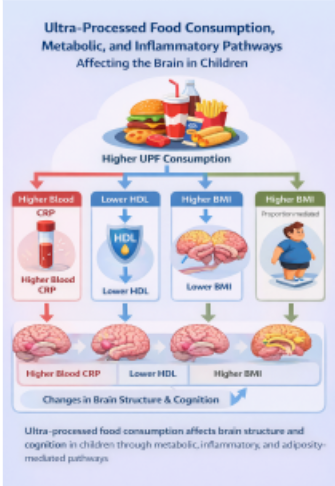
Fig. 1.2: Graphic illustrating how ultra-processed food consumption affects brain structure and cognition in children through metabolic, inflammatory, and adiposity-mediated pathways [31]
Conclusion
Conclusively it can be said, the use of ultra-processed foods, processed milk and adulterated milk has caused a significant threat to the health and development of growing children. The adulteration of milk highlights systemic regulatory failure in Pakistan. While processed milk products offer convenience, they cannot replicate the nutritional and protective benefits of breast milk. Addressing these issues requires stricter food safety enforcement, regulatory modernization, responsible industry practices, and public education.
Works Cited
[1] Al-Hamad, D. and Raman, V., 2017. Metabolic syndrome in children and adolescents. Translational Pediatrics, 6(4), p.397.
[2] Nissinen, K., Mikkilä, V., Männistö, S., Lahti-Koski, M., Räsänen, L., Viikari, J. and Raitakari, O.T., 2009. Sweets and sugar-sweetened soft drink intake in childhood in relation to adult BMI and overweight. The Cardiovascular Risk in Young Finns Study. Public Health Nutrition, 12(11), pp.2018–2026.
[3] Bahadoran, Z., Mirmiran, P. and Azizi, F., 2016. Fast food pattern and cardiometabolic disorders: a review of current studies. Health Promotion Perspectives, 5(4), p.231.
[4] Schwingshackl, L., Hobl, L.P. and Hoffmann, G., 2015. Effects of low glycaemic index/low glycaemic load vs. high glycaemic index/high glycaemic load diets on overweight/obesity and associated risk factors in children and adolescents: a systematic review and meta-analysis. Nutrition Journal, 14(1), p.87.
[5] American Society for Nutrition, 2022. Are highly processed foods bad for children? ScienceDaily, 15 June.
[6] News-Medical, n.d. Study shows how consumption of ultraprocessed foods affects children. News-Medical. Reviewed by Emily Henderson, B.Sc.
[7] Ghulam, S.B., Atta, H.S., Asad, A.K., Shoaib, A.P., Gul, B.K., Mansoor, T.S. and Atique, A.B. Risk of adulteration in market milk supplied to public sector.
[8] Mujtaba, S.B., 2025. Milk suppliers protest as PFA tightens checks. The Nation, 4 December.
[9] Azad, T. and Ahmed, S., 2016. Common milk adulteration and their detection techniques. International Journal of Food Contamination, 3(1), p.22.
[10] Chauhan, S.L., Priyanka, K.D.M., Paul, B.R. and Maji, C., 2019. Adulteration of milk: A review. IJCS, 7(1), pp.2055–2057.
[11] Malik, N., 2024. Food adulteration in Pakistan: A major threat to youth's health and life. Pakistan Journal of Scientific & Industrial Research Series B: Biological Sciences, 67(1).
[12] 6Wresearch, 2025. Pakistan Milk Powder Market (2025–2031) | Segmentation & Size.
[13] Dairynews.today, 2024. Pakistan. Milkypedia.
[14] Koivusaari, K., Syrjälä, E., Niinistö, S., Ahonen, S., Åkerlund, M., Korhonen, T.E., Toppari, J., Ilonen, J., Kaila, M., Knip, M., Alatossava, T., Veijola, R. and Virtanen, S.M., 2021. Consumption of differently processed milk products and the risk of asthma in children. Pediatric Allergy and Immunology, 33(1).
[15] Baker, P., Santos, T., Neves, P.A., Machado, P., Smith, J., Piwoz, E., Barros, A.J., Victora, C.G. and McCoy, D., 2021. First-food systems transformations and the ultra-processing of infant and young child diets: The determinants, dynamics and consequences of the global rise in commercial milk formula consumption. Maternal & Child Nutrition, 17(2), p.e13097.
[16] Koivusaari, K. et al., 2020. Consumption of differently processed milk products in infancy and early childhood and the risk of islet autoimmunity. British Journal of Nutrition, 124(2), pp.173–180.
[17] Martin, C., Ling, P.-R. and Blackburn, G., 2016. Review of infant feeding: Key features of breast milk and infant formula. Nutrients, 8(5), p.279.
[18] Writer, S., 2024. Health risks of refined and processed milk. Organic Authority.
[19] Lönnerdal, B., 2014. Infant formula and infant nutrition: bioactive proteins of human milk and implications for composition of infant formulas. The American Journal of Clinical Nutrition, 99(3), pp.712S–717S.
[20] Ahern, G.J., Hennessy, A.A., Ryan, C.A., Ross, R.P. and Stanton, C., 2019. Advances in infant formula science. Annual Review of Food Science and Technology, 10(1), pp.75–102.
[21] Roberts, D., Jackson, L., Davie, P., Zhao, C., Harrold, J.A., Fallon, V. and Silverio, S.A., 2023. Exploring the reasons why mothers do not breastfeed, to inform and enable better support. Frontiers in Global Women's Health, 4, p.1148719.
[22] 6Wresearch, 2025. Pakistan Flavored Milk Market (2025–2031) | Share & Analysis.
[23] Children’s Health, 2024. Effects of ultraprocessed foods on kids.
[24] Chamarthi, V.S., Shirsat, P., Sonavane, K., Parsi, S., Ravi, U., Ponnam, H.C., Bindlish, S., Nadler, E.P., Kashyap, R. and Ro, S., 2025. The impact of ultra-processed foods on pediatric health. Obesity Pillars, 16, p.100203.
[25] Hide Byline, 2025. MAHA report on children’s health highlights harms of ultraprocessed foods – a food scientist explains the research. Clemson News.
[26] Li, H., Li, S., Yang, H., Zhang, Y., Zhang, S., Ma, Y., Hou, Y., Zhang, X., Niu, K., Borné, Y. and Wang, Y., 2022. Association of ultraprocessed food consumption with risk of dementia: a prospective cohort study. Neurology, 99(10), pp.e1056–e1066.
[27] Bhave, V.M., Oladele, C.R., Ament, Z., Kijpaisalratana, N., Jones, A.C., Couch, C.A., Patki, A., Garcia Guarniz, A.L., Bennett, A., Crowe, M. and Irvin, M.R., 2024. Associations between ultra-processed food consumption and adverse brain health outcomes. Neurology, 102(11), p.e209432.
[28] Morys, F., Dadar, M. and Dagher, A., 2021. Association between midlife obesity and its metabolic consequences, cerebrovascular disease, and cognitive decline. The Journal of Clinical Endocrinology & Metabolism, 106(10), pp.e4260–e4274.
[29] Medawar, E. and Witte, A.V., 2022. Impact of obesity and diet on brain structure and function: a gut–brain–body crosstalk. Proceedings of the Nutrition Society, 81(4), pp.306–316.
[30] Sewaybricker, L.E., Huang, A., Chandrasekaran, S., Melhorn, S.J. and Schur, E.A., 2023. The significance of hypothalamic inflammation and gliosis for the pathogenesis of obesity in humans. Endocrine Reviews, 44(2), pp.281–296.
[31] Morys, F. et al., 2025. Ultra-processed food consumption affects structural integrity of feeding-related brain regions independent of and via adiposity. npj Metabolic Health and Disease.